

Cheshire Police uncover 70 victims across the UK as investigation exposes how a 27-year-old Indian man allegedly posed as a white British teenager to groom young girls online.
An Indian national, Bilal Kazi, has been sentenced to 30 years in prison following what Cheshire Constabulary has described as its largest-ever investigation into online child sexual abuse.
The 27 year old, from Hubert Croft, Birmingham, appeared at Chester Crown Court on Friday, 13 November, where he received a 30-year prison sentence followed by an additional eight years on extended licence. He had pleaded guilty to 37 child sexual offences.
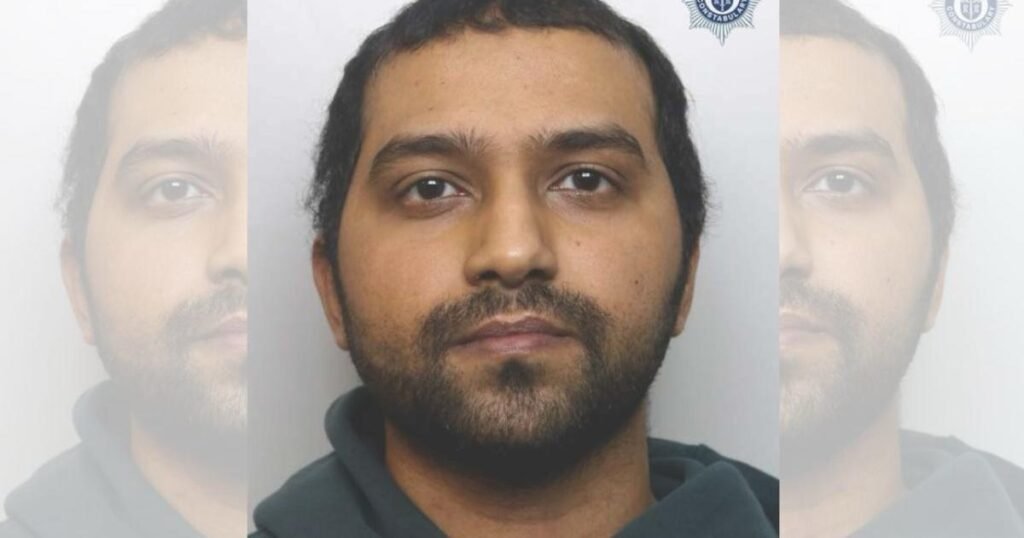
The investigation uncovered an alarming pattern of online grooming, blackmail and sexual exploitation involving dozens of young girls across the United Kingdom.
Posing as a white British teenager to target children
According to Cheshire Police, Kazi used social media platforms, including Snapchat, Roblox and Wink, to approach young girls while pretending to be a white British teenage boy named ‘Reece’.
Using photographs of an unidentified boy, he manipulated his victims into believing they were communicating with someone of their own age and entering genuine romantic relationships.
Once he had gained their trust, he began demanding explicit photographs and videos. When girls refused, he threatened to distribute material they had previously shared with him.
The investigation identified 180 potential victims, with 70 girls aged between 11 and 17 successfully identified across 28 police forces in the UK.
Some victims remained in contact with Kazi for more than a year, believing they were communicating with an entirely different person.
A wider issue: Stop judging communities by religion or appearance
The case also raises an important issue about assumptions and prejudice within British society.
In Britain, when allegations involving Muslim communities or individuals of Pakistani background emerge, some people are quick to associate criminal behaviour with Pakistanis or Muslims simply because of their religion, appearance or perceived background.
However, this case is a reminder that criminality must be judged by evidence, not ethnicity, nationality or religion.
Bilal Kazi is an Indian man, not a Pakistani. His crimes must be attributed to him as an individual, not to an entire religious, ethnic or national community.
There must be no double standards when reporting crime. If an offender is Pakistani, Indian, British or from any other background, their identity should be reported accurately, without allowing prejudice to turn an individual’s crimes into collective blame.
Muslim communities, Pakistani communities and other minorities should not be made to answer for crimes committed by individuals who happen to share a religion or perceived identity.
Police warn parents about online dangers
Detective Constable Georgia Hughes, from Cheshire Constabulary’s Online Child Abuse Investigation Team, described the investigation as a mammoth operation involving significant resources and cooperation between specialist teams.
She highlighted the devastating and long-lasting impact of online abuse, explaining that many victims had lived in fear and intimidation for years.
Detective Sergeant Ross Peel also urged parents to take a greater interest in the apps and online platforms their children use.
He stressed that victims should never feel ashamed, as responsibility lies entirely with the offender.
Police warned that hiding behind a screen does not make offenders anonymous or untouchable, adding that those who target children will be identified and brought to justice.
The message is clear
This case is not about blaming a nationality, religion or community. It is about protecting children, holding offenders accountable and reporting facts accurately.
British society must reject collective blame. Being Muslim does not make someone Pakistani, and being Pakistani or Indian does not make someone responsible for another individual’s crimes. Justice must be based on evidence, not prejudice.
By Safina Khan | Voice of Asia News