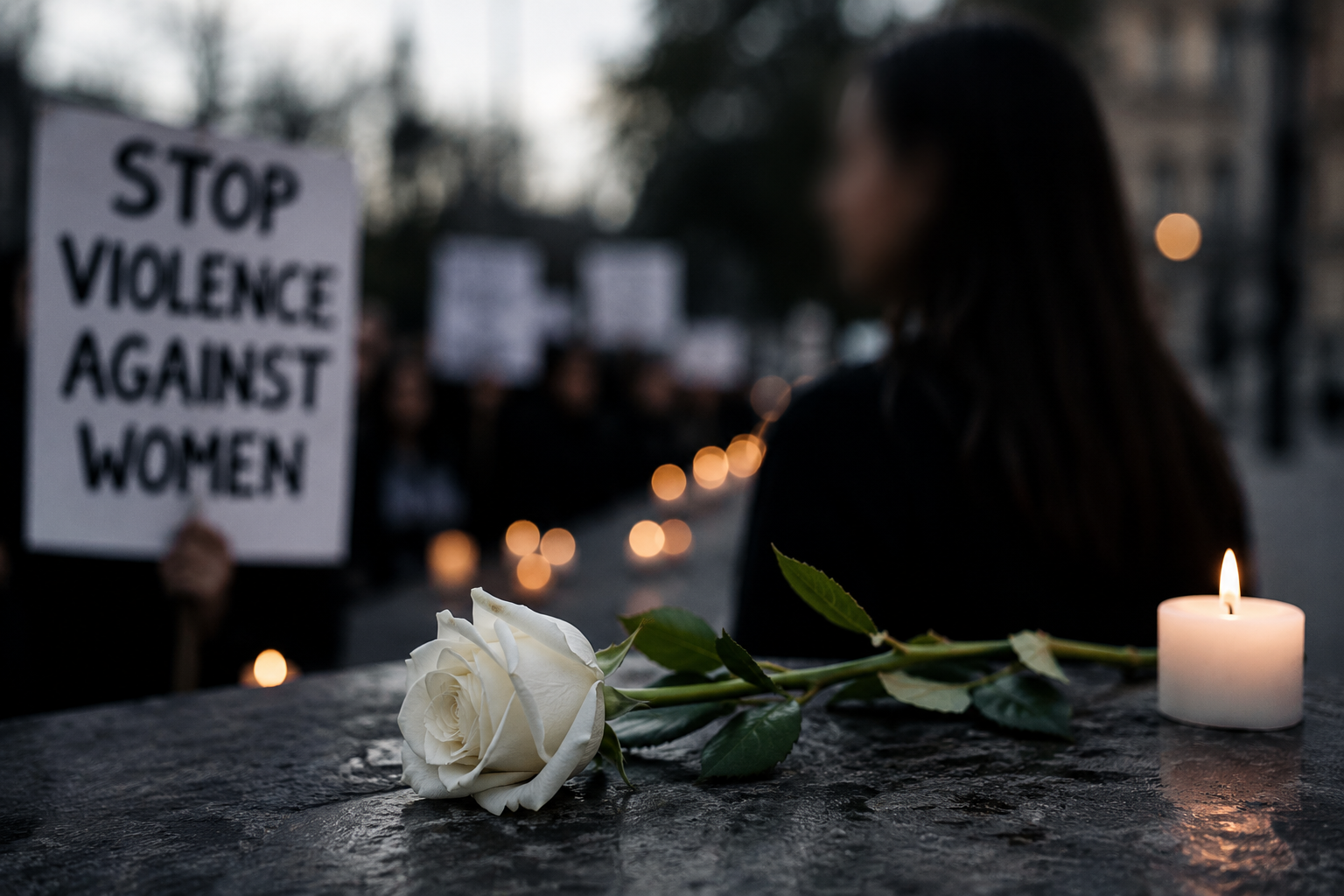

Pakistan has witnessed many painful cases involving violence against women but the murder of young TikTok influencer Sana Yousaf shook the conscience of the nation in a different way. A 17 year old girl full of dreams and confidence, was allegedly killed simply because she rejected unwanted advances. This was not just a murder. it was an attack on a woman’s right to say “no”
This week, an Islamabad court sentenced Umar Hayat to death in the Sana Yousaf murder case along with additional prison terms and financial penalties. Sana’s parents called the verdict justice not only for their daughter but for every girl in Pakistan who wants to live freely and safely.
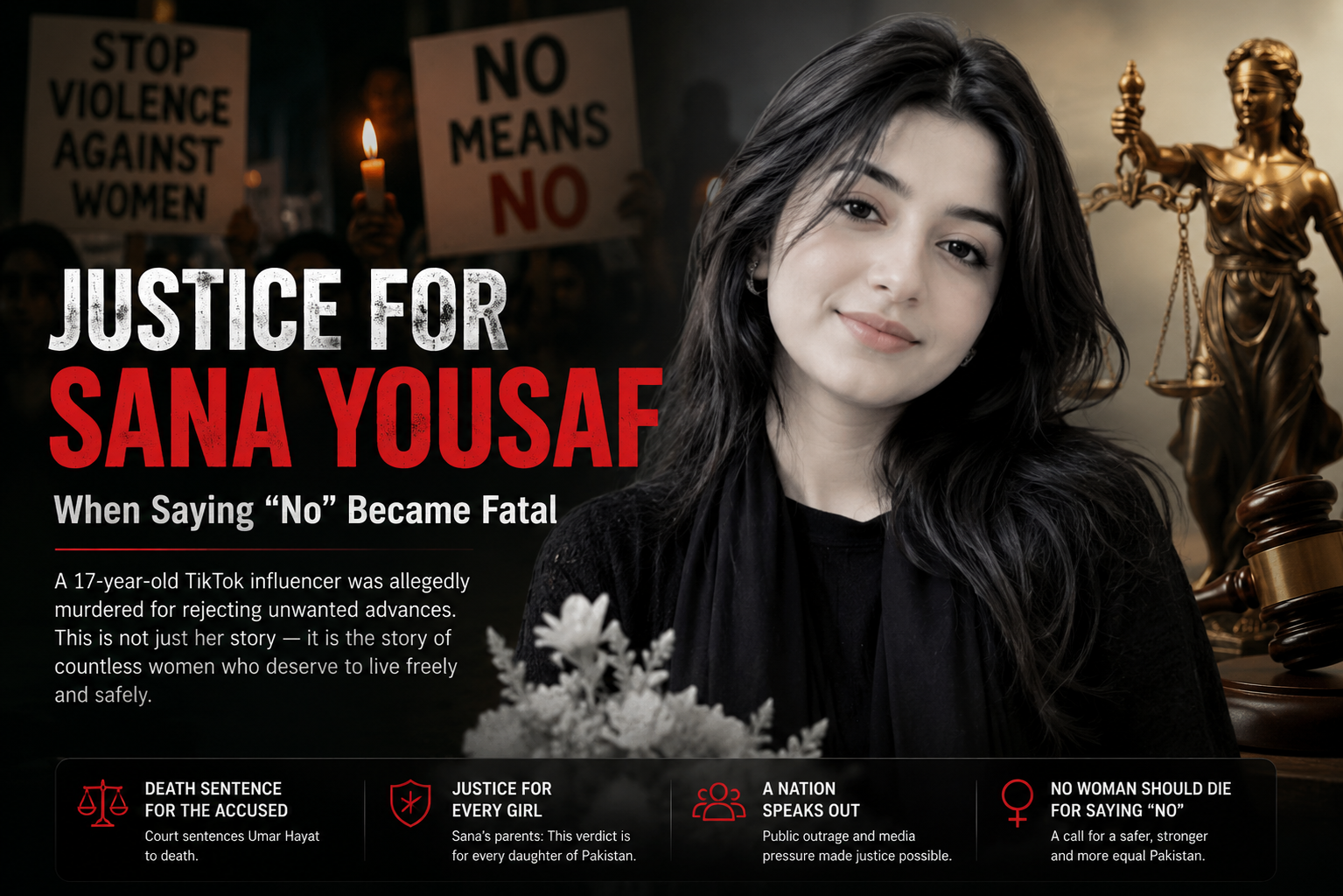
Sana Yousaf was more than a social media influencer. She represented a new generation of Pakistani women confident, educated, ambitious and proud of their identity. Through her videos, she spoke about culture, fashion, girls’ education and women’s empowerment. Millions followed her because she symbolised hope and modern Pakistani youth.
According to police and court records, the accused repeatedly tried to contact Sana and could not accept rejection. Investigators described the killing as “cold blooded” saying she was shot inside her own home in Islamabad before the suspect fled the scene. He was arrested within hours after CCTV footage and digital evidence helped police track him down.
For too long, crimes against women in South Asia have been hidden behind excuses of “honour” ego or male entitlement. The Sana Yousaf case forced Pakistan to confront an uncomfortable truth many women are still punished simply for exercising personal choice. Rejecting a proposal, refusing attention or choosing independence should never become a death sentence.
At the same time, this verdict also sends an important message about the Pakistani state and justice system. When the law acts firmly and transparently, it restores public confidence. The public outrage, media attention and pressure from civil society ensured that this case was not buried or forgotten. Pakistan’s institutions showed that a young woman’s life matters and that violence against women cannot be normalised.
However, a verdict alone is not enough. Justice must not become symbolic. Pakistan now faces a larger responsibility ensuring that women across the country whether they are influencers, journalists, students or ordinary daughters feel protected by the state. Fast investigations, strong prosecution, witness protection and social awareness are essential if the country truly wants to end gender based violence.
Sana Yousaf’s murder became a national tragedy but it must also become a turning point. A strong Pakistan is not only measured by military power or politics. it is measured by how safely its women can walk, speak, work and dream.
Her voice was silenced but the message left behind is louder than ever: no woman should be killed for saying “no”