
By Safina khan/ London
Terrorism Has No Province: Pakistan Needs Unity, Not Internal Division
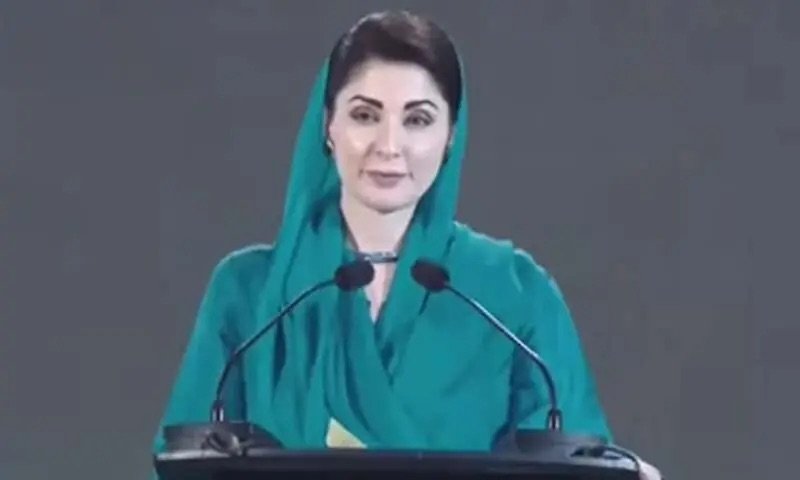
Punjab Chief Minister Maryam Nawaz Sharif recently made a statement regarding the security threats facing Punjab, saying that, unfortunately, the threat she faces from the neighbouring province is greater than that from the neighbouring country, and that terrorism enters Punjab from there.
The remarks have sparked criticism on social media, with some commentators portraying them as an attempt to create a provincial divide. Others, however, argue that the Chief Minister was referring specifically to the movement of militant elements across provincial boundaries and the security challenges this creates for Punjab.
The Punjab government has also rejected the interpretation that the Chief Minister was targeting the people of any particular province. It maintains that her comments were taken out of context and politically portrayed as an attack on provincial identity and ethnicity. According to the government, Maryam Nawaz has consistently expressed respect for all provinces and the people who live in them.
Nevertheless, statements concerning terrorism and national security require particular care. Pakistan has already paid an enormous price in the fight against terrorism, and no province has remained completely untouched by its consequences.
The people of Khyber Pakhtunkhwa, in particular, have endured years of terrorism, losing civilians, police officers, security personnel, political workers and community leaders. Balochistan has also suffered devastating attacks, while Sindh and Punjab have faced their own serious security challenges.
For this reason, it is important to ask a broader question: Can terrorism really be treated as a provincial issue?
The answer should be no.
A terrorist does not carry a provincial identity. Terrorism does not recognise provincial boundaries, ethnicities or political affiliations. If militants move from one part of the country to another, the threat is ultimately a threat to Pakistan as a whole.
Equally important is the distinction between militant groups and ordinary citizens. The people of Khyber Pakhtunkhwa or Balochistan should never be collectively associated with terrorism simply because militants operate in, pass through or originate from particular areas. In fact, many of the communities living in these regions have been among the greatest victims of terrorism.
Pakistan therefore needs a national security narrative that brings its provinces together rather than placing them against one another.
There is nothing wrong with identifying the movement of terrorists, investigating their networks or taking action against those who facilitate them. If there is evidence that militant elements are crossing provincial boundaries, the authorities must address the issue through intelligence, law enforcement and coordinated counter-terrorism operations.
But the language used to describe such threats matters.
At a time when Pakistan faces serious security challenges, political polarisation and hostile propaganda, public statements that can be interpreted as portraying one province as a source of danger to another can have unintended consequences. They can deepen mistrust among citizens and provide opportunities for those who seek to exploit Pakistan’s internal divisions.
The same principle applies to political opponents. Criticism of the Chief Minister is legitimate in a democratic society, but criticism should focus on the substance and context of her remarks rather than turning the issue into a confrontation between provinces or communities.
Pakistan’s provinces have more in common than what divides them. Punjab, Khyber Pakhtunkhwa, Sindh and Balochistan have all contributed to the country’s development and have all suffered the consequences of terrorism.
The real enemy is terrorism—not a province, not an ethnicity and not an ordinary Pakistani citizen.
Pakistan’s security challenge demands a united national response. Political leaders, regardless of party or province, have a responsibility to ensure that their words strengthen public confidence and national cohesion rather than unintentionally reinforcing the very divisions that Pakistan’s enemies seek to exploit.
The debate surrounding Maryam Nawaz’s remarks should therefore be an opportunity for a broader conversation about how Pakistan confronts terrorism: firmly, intelligently and collectively.
Terrorism has no province. Pakistan’s response should have no provincial divide either.